Creating and selling online courses in 2026: what actually works after seeing thousands of academies
The complete guide to strategy, content creation, community, and sales. What we've learned from working with creators across thousands of academies.
Jump straight to a section
introduction: from which problems this guide was born
The way people buy and consume online courses has changed dramatically over the past two years, yet most of the guides you'll find online still haven't caught up.
Today, your course doesn't just compete with other courses. It competes with entertainment platforms, social media, and thousands of free videos on virtually any topic. The DataReportal Digital 2026 report shows just how much of our daily attention is now consumed by mobile devices, online video, and social platforms. People no longer pay only for information. They pay for you: your perspective on the problem, your presence inside the community spaces (spoiler: you should absolutely have them), and your personality.
From these three forces: fragmented attention, value shifting toward the creator, and a constantly rising standard, almost everything else follows: how you define your promise, how you structure your course, how you sell it, and how you keep students engaged.
This guide brings together the secrets, patterns, and strategies we've seen work in the real world while supporting thousands of creators across the globe on our platform and analyzing 8,790 support conversations with them. The sections that follow start with choosing the right problem and end with launching your course, covering production, sales, and operations along the way, giving you everything you need to create a course that outperforms the competition in 2026.
Today, your course doesn't just compete with other courses. It competes with entertainment platforms, social media, and thousands of free videos on virtually any topic. The DataReportal Digital 2026 report shows just how much of our daily attention is now consumed by mobile devices, online video, and social platforms. People no longer pay only for information. They pay for you: your perspective on the problem, your presence inside the community spaces (spoiler: you should absolutely have them), and your personality.
From these three forces: fragmented attention, value shifting toward the creator, and a constantly rising standard, almost everything else follows: how you define your promise, how you structure your course, how you sell it, and how you keep students engaged.
This guide brings together the secrets, patterns, and strategies we've seen work in the real world while supporting thousands of creators across the globe on our platform and analyzing 8,790 support conversations with them. The sections that follow start with choosing the right problem and end with launching your course, covering production, sales, and operations along the way, giving you everything you need to create a course that outperforms the competition in 2026.
Force 1: the attention you fight for is the same as TikTok's
Your phone offers messages, social feeds and short videos at any time. Someone may buy a course with genuine motivation and delay the second lesson for weeks, not because the course is bad, but because their day is already full. The study Accelerating dynamics of collective attention published in Nature Communications describes this acceleration: peaks of interest last for less time and follow one another faster.
OECD PISA data also shows a relationship between device use, social networks and distraction while studying in Managing screen time. These figures concern younger students and should be read cautiously, but they point in one direction: short, accessible sessions reduce friction substantially.
The product decisions are concrete: shorter lessons, modular paths, active communities that give students a reason to return, and a mobile experience designed for spare moments. Keep this force in mind as a filter: every product decision should make returning easier, not harder.
OECD PISA data also shows a relationship between device use, social networks and distraction while studying in Managing screen time. These figures concern younger students and should be read cautiously, but they point in one direction: short, accessible sessions reduce friction substantially.
The product decisions are concrete: shorter lessons, modular paths, active communities that give students a reason to return, and a mobile experience designed for spare moments. Keep this force in mind as a filter: every product decision should make returning easier, not harder.
Force 2: value has shifted from information to the person
A few years ago, you could sell a course because it contained information that was hard to find. Today YouTube already has a good tutorial on almost any topic, and ChatGPT explains the rest in five minutes. If you build a course around the idea that "people will pay to learn X", you compete directly with free content: you will usually lose.
People pay for something they cannot get for free: a recognizable guide. They pay for your way of reading a problem, your sequence, your presence when they get stuck, and the feeling that they are not alone in a group where you genuinely answer.
We often explain this by saying that you need to become your product. It is the difference between a catalog of interchangeable video lessons and a path that carries your name. The practical consequence is simple: on the sales page, in the community and during live sessions, show a person rather than a polished brand. As we often tell creators: "When you try to appeal to everyone, you do not appeal to fewer people, but nobody feels strongly drawn to you. And the people who genuinely like you are exactly the ones you need."
If you do not want to show your personality, you are choosing the most crowded lane in the market. It can be done, but the price is competing with large budgets, which are usually impersonal too, and free content.
People pay for something they cannot get for free: a recognizable guide. They pay for your way of reading a problem, your sequence, your presence when they get stuck, and the feeling that they are not alone in a group where you genuinely answer.
We often explain this by saying that you need to become your product. It is the difference between a catalog of interchangeable video lessons and a path that carries your name. The practical consequence is simple: on the sales page, in the community and during live sessions, show a person rather than a polished brand. As we often tell creators: "When you try to appeal to everyone, you do not appeal to fewer people, but nobody feels strongly drawn to you. And the people who genuinely like you are exactly the ones you need."
If you do not want to show your personality, you are choosing the most crowded lane in the market. It can be done, but the price is competing with large budgets, which are usually impersonal too, and free content.
Choose your market, ideal student and problem before writing the curriculum
Before designing the course, clarify who you want to help and which problem you want to solve. A generic course is difficult to sell because it creates no urgency. A specific course, on the other hand, allows the right person to immediately recognize themselves in the promise you're making.
A useful niche should be clear and recognizable without necessarily being tiny. "Yoga" is too broad. "Yoga for women over 45 who want to reduce back pain and stiffness without intense workouts" is much clearer. "Digital marketing" is too broad. "A LinkedIn content system for B2B consultants who want to generate qualified sales calls" is far easier to position and sell.
When evaluating a market, look for three signals:
A useful niche should be clear and recognizable without necessarily being tiny. "Yoga" is too broad. "Yoga for women over 45 who want to reduce back pain and stiffness without intense workouts" is much clearer. "Digital marketing" is too broad. "A LinkedIn content system for B2B consultants who want to generate qualified sales calls" is far easier to position and sell.
When evaluating a market, look for three signals:
- Strong pain or desire: does the person genuinely want to change something, or are they simply curious?
- Ability to spend: can this audience afford to invest money to solve the problem?
- Demonstrable results: can you show examples, proof, case studies, before-and-after transformations, exercises, or concrete outcomes?
Start with the promise: a course sells a result, not information
Starting from the curriculum feels reassuring: "I will make 40 lessons on this topic" already sounds like a plan. However, that is a mistake. Ask the harder question first: why should someone buy specifically from you, right now?
Before writing modules, define four things:
The promise is also a filter. It stops you from adding lessons just because they "might be useful". If a lesson does not move the student toward the promised result, it probably belongs in a bonus, an advanced course or free content, not in the main path.
Before writing modules, define four things:
- Starting point: where the student is now and what they have already tried and what frustrates them.
- Destination: what they will be able to do, build, decide, improve or avoid after the course.
- Your mechanism: the method that makes the transformation credible: your framework or path.
- Promise boundaries: what the course does and does not do, to avoid unrealistic expectations.
The promise is also a filter. It stops you from adding lessons just because they "might be useful". If a lesson does not move the student toward the promised result, it probably belongs in a bonus, an advanced course or free content, not in the main path.
💡 If you cannot explain the student's result in one sentence, revisit your positioning before working on the sales page.
Validate the market before recording your first video
Many creators record the entire course before collecting market signals, because that is what they want and know how to do. If sales do not arrive, it becomes difficult to tell whether the problem is the audience, the promise or the price.
Use a waiting list, a masterclass, discovery calls or a small product.Before recording weeks of content, look for spontaneous answers and people willing to pay.
Do not ask "would you like a course about X?". Most people politely say yes. Ask: "what is the most frustrating part?", "what have you already tried?" and "what does postponing it cost you?".
Use a waiting list, a masterclass, discovery calls or a small product.Before recording weeks of content, look for spontaneous answers and people willing to pay.
Do not ask "would you like a course about X?". Most people politely say yes. Ask: "what is the most frustrating part?", "what have you already tried?" and "what does postponing it cost you?".
Design the path: less encyclopedia, more progression
Experienced creators often fall into the encyclopedic-course trap. They try to demonstrate everything they know and create a huge, intimidating path. The result is paradoxical: the content is technically more complete, but students get lost and drop out. A course is a journey: if it is too long, complex or confusing, people stop.
Design a sequence of small outcomes. At the end of each module, students should have done something recognizable. Before adding a lesson, ask: "is this necessary to reach the promised result?"
A practical structure:
Design a sequence of small outcomes. At the end of each module, students should have done something recognizable. Before adding a lesson, ask: "is this necessary to reach the promised result?"
A practical structure:
- Module 0: orientation, goal and a first quick win.
- Core modules: one phase of the process per module, ending with an exercise or output.
- Troubleshooting module: common mistakes, doubts, alternatives and examples.
- Extra resources: templates, checklists and bonuses separated from the essential path.
Choose the format according to the task
Video matters, but it should not be the whole course. A video-only course can become cumbersome, especially when students need to find a precise answer or return to a specific passage. Alternate formats in a practical way. Use video for explanations and demonstrations, text for quick reference, and quizzes to check understanding and give students a sense of progress.
This matters even more on mobile. Someone can watch a short lesson during lunch, read a checklist on their phone, answer a quiz in two minutes or ask a question in the community while traveling. If the course always requires 45 minutes sitting at a computer, it asks too much of the student's real life.
Choose the format that simplifies the next step. Research on MOOC videos by Guo, Kim and Rubin found that shorter videos tend to be watched much more. If a lesson exceeds 15 minutes, ask whether you can split it into two or more parts, or replace a portion with text, a quiz or an exercise.
This matters even more on mobile. Someone can watch a short lesson during lunch, read a checklist on their phone, answer a quiz in two minutes or ask a question in the community while traveling. If the course always requires 45 minutes sitting at a computer, it asks too much of the student's real life.
Choose the format that simplifies the next step. Research on MOOC videos by Guo, Kim and Rubin found that shorter videos tend to be watched much more. If a lesson exceeds 15 minutes, ask whether you can split it into two or more parts, or replace a portion with text, a quiz or an exercise.
Production: a smartphone is enough, but close audio and front light are mandatory
Many creators on our platform record with a smartphone. Recent cameras are more than sufficient if you take care of audio, light and framing. Audio matters most. If your voice sounds distant, reverberated or noisy, students immediately perceive low quality even if the content is excellent. Buy a simple Bluetooth or lavalier microphone, connect it to your phone and place it close to your mouth, collar or wherever you speak from. The goal is to capture your voice up close, not the whole room.
Put a light source in front of you, slightly above your face: a ring light, an inexpensive LED panel or a front-facing window. Keep the camera at eye level, leave a little space above your head and remove distractions from the background. Here is one of our creators who recorded with a smartphone, Bluetooth microphone, front light and phone stand:
Put a light source in front of you, slightly above your face: a ring light, an inexpensive LED panel or a front-facing window. Keep the camera at eye level, leave a little space above your head and remove distractions from the background. Here is one of our creators who recorded with a smartphone, Bluetooth microphone, front light and phone stand:

| Priority | Tool | What really matters |
|---|---|---|
| 1 | Close microphone | Lavalier, Bluetooth or clip-on: keep it close to your mouth |
| 2 | Front light | Readable face, no backlight, soft shadows |
| 3 | Phone stand | Stable framing, camera at eye level |
| 4 | Room | Tidy background, quiet room, notifications disabled |
| 5 | Outline | Visible key points, ready examples, one lesson objective |
💡 A simple video with clean audio is better than an elegant production with a distant voice. Students forgive ordinary framing much more easily than unpleasant audio.
How to use artificial intelligence without lowering course quality
AI can remove mechanical work, but it cannot replace the part of you that makes the course sell: your experience, your interpretation of the problem and the examples you choose because you lived them.
Platforms now promise to generate course modules and content directly with AI. You provide a topic and the AI builds the structure and lessons. It works in theory. In practice, it produces mediocre, interchangeable courses because AI does not know your method, your customers or the real blocks you have seen a hundred times. If you want to use ChatGPT to design the path, reverse the flow: provide a complete overview of your teaching approach, the results you deliver and typical student mistakes, then use its output as a draft to refine. The structure remains yours; AI saves you writing time.
AI is invaluable in activities that amplify your work without diluting it. On Esmerise, for example, you can generate multilingual automatic subtitles for your videos, translate your voice into other languages to internationalize your course without recording anything again, and create quizzes from existing content. In these cases, AI does not replace the human part of your course: it strengthens it.
Platforms now promise to generate course modules and content directly with AI. You provide a topic and the AI builds the structure and lessons. It works in theory. In practice, it produces mediocre, interchangeable courses because AI does not know your method, your customers or the real blocks you have seen a hundred times. If you want to use ChatGPT to design the path, reverse the flow: provide a complete overview of your teaching approach, the results you deliver and typical student mistakes, then use its output as a draft to refine. The structure remains yours; AI saves you writing time.
AI is invaluable in activities that amplify your work without diluting it. On Esmerise, for example, you can generate multilingual automatic subtitles for your videos, translate your voice into other languages to internationalize your course without recording anything again, and create quizzes from existing content. In these cases, AI does not replace the human part of your course: it strengthens it.
Offer and pricing: what are you helping people achieve?
To set your price, consider four elements: the value of the benefit and the cost of alternatives; competitor pricing; your credibility; and the time and resources invested relative to your revenue goal. Your first price does not need to be perfect: you can test it after launch.
Avoid starting too low. Paid ads become harder to sustain, the course may look less valuable, someone will always be cheaper, and the effort required to sell does not fall in proportion to price.
Positioning matters too. Try to become your product: the courses we see succeed expose a recognizable person, not an impersonal content bundle. "When you try to appeal to everyone, fewer people strongly like you. And those are precisely the people you need."
You can create several offer levels:
Avoid starting too low. Paid ads become harder to sustain, the course may look less valuable, someone will always be cheaper, and the effort required to sell does not fall in proportion to price.
Positioning matters too. Try to become your product: the courses we see succeed expose a recognizable person, not an impersonal content bundle. "When you try to appeal to everyone, fewer people strongly like you. And those are precisely the people you need."
You can create several offer levels:
- Basic: course access and essential materials.
- Advanced: course, community, bonuses, live sessions or Q&A.
- Premium: personal feedback, calls and more direct support.
Your first sales page
Your sales page must convert the right person, with the right level of trust, toward the right choice. A confusing page often comes from a confusing offer. If you do not know what you promise, who you promise it to and why you are credible, no design will solve the problem.
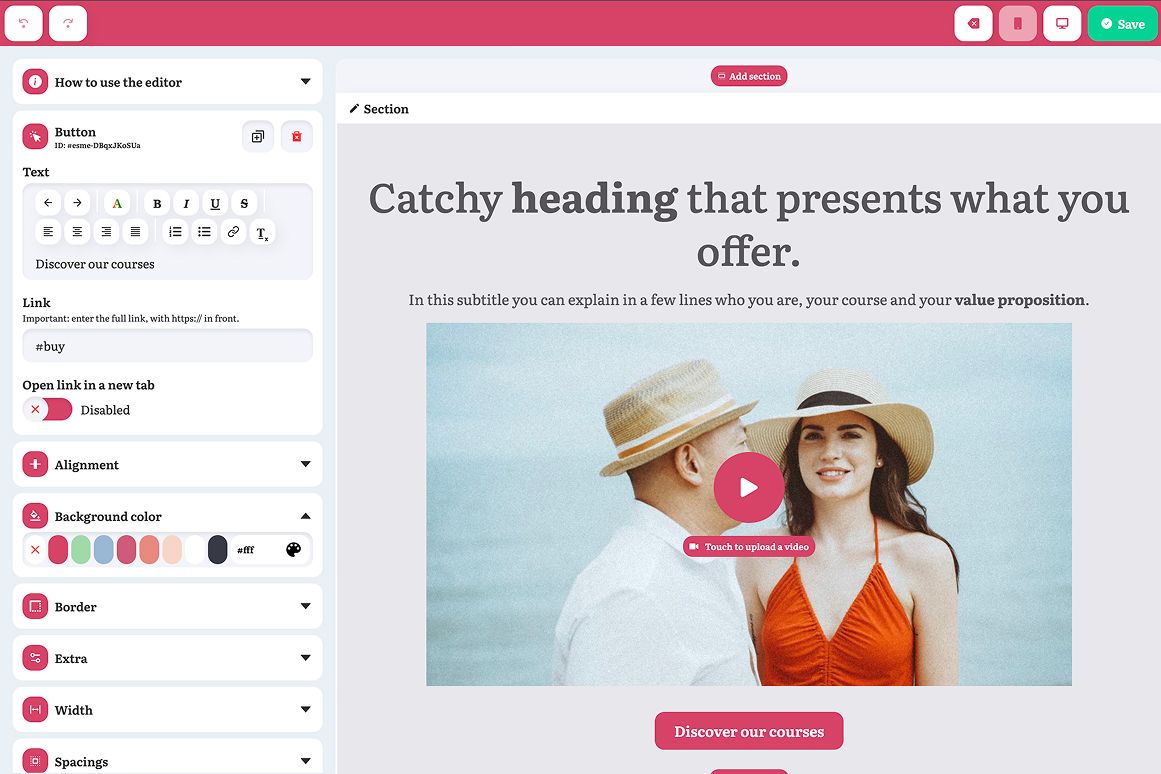
Here is a very simple template you can follow and adapt to your style and personality. If you use Esmerise, you will already find it as an option when you create a page:
Here is a very simple template you can follow and adapt to your style and personality. If you use Esmerise, you will already find it as an option when you create a page:
- Hero: explain at a glance who the course is for and which result it promises.
- Problem: describe a situation the student recognizes as real.
- Method: show the path you propose and your method.
- Evidence: use cases, testimonials or screenshots to show why you are the best person to help them.
- Offer: clarify what buyers receive.
- Objections / FAQ: answer the doubts collected from conversations with your audience.
Acquisition: choose one sustainable sales system, not ten channels at once
An excellent course still needs distribution. The truth is that a mediocre course with excellent marketing will always beat an excellent course with mediocre marketing. That's uncomfortable to accept for people who come from a background of expertise and craftsmanship, but it's true.
In 2026, the distribution systems that work best follow a very specific architecture built around the same three forces discussed in the introduction. People want to buy from a recognizable person, not from an anonymous brand. That shifts the center of gravity toward channels where you can show who you are before asking for money. The sequence we see working best is this:
In 2026, the distribution systems that work best follow a very specific architecture built around the same three forces discussed in the introduction. People want to buy from a recognizable person, not from an anonymous brand. That shifts the center of gravity toward channels where you can show who you are before asking for money. The sequence we see working best is this:
- Build trust in public. Choose a single organic channel (Instagram, YouTube, TikTok, LinkedIn, or a newsletter) and work on it consistently for a few months. Show how you think about the problem, share examples, and let people see behind the scenes. The goal is not to go viral. The goal is that anyone who discovers you understands within thirty seconds what you do and who you help.
- Capture the attention you've built. Everything you publish should lead toward an asset you own, not one controlled by an algorithm. A downloadable checklist, a free webinar, a waiting list for your course. This is where you convert distracted followers into people you can actually reach. It's the difference between "I hope the algorithm shows my content again" and "I have their email address."
- Sell through email. Even in 2026, your email list is the only channel you truly control. No algorithms and nobody standing between you and your audience. It's also where people expect more personal and in-depth content, making it the ideal place to explain your methodology, share case studies, address objections, and invite people to buy. To give you a sense of scale, according to Litmus, email marketing generates an average of $36 for every dollar spent.
- Scale with ads only afterward. Meta Ads and Google Ads are fuel. They amplify something that already converts, but they don't create demand out of thin air if the offer itself doesn't work yet. If you haven't made sales organically, paying for traffic to a sales page only makes sense once you're genuinely confident that the page converts.
The platform shapes how students experience the course
Many guides reduce platform selection to one line: "find somewhere to upload videos". That can be enough for a mini-course, but when the course is central to your offer, software strongly influences how students perceive and follow it.
For example, a platform that does not work perfectly on mobile or does not integrate community sections with the course can make the experience fragmented and less engaging. Whether a feature gets used can come down to just one extra click.
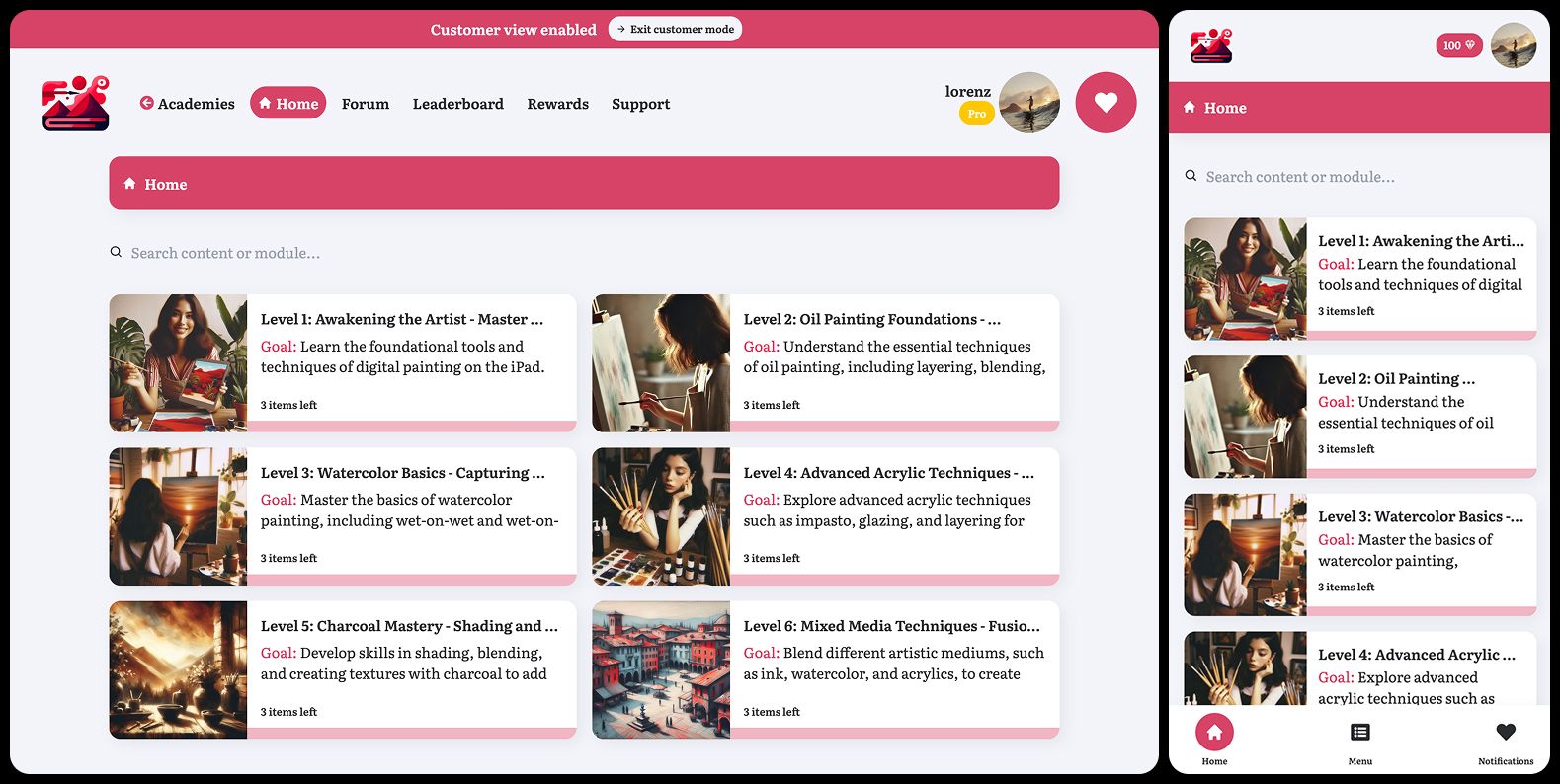
Esmerise was designed, and every detail has evolved, around this problem: the result is a student-experience template you can simply follow. Courses and community share the same space; creators can sell from the platform and students can install their academy as an app. Gamification helps make progress visible and increase completion and satisfaction rates.
To explore this aspect in more depth, read our detailed comparison of the best platforms for creating and selling online courses.
For example, a platform that does not work perfectly on mobile or does not integrate community sections with the course can make the experience fragmented and less engaging. Whether a feature gets used can come down to just one extra click.
Esmerise was designed, and every detail has evolved, around this problem: the result is a student-experience template you can simply follow. Courses and community share the same space; creators can sell from the platform and students can install their academy as an app. Gamification helps make progress visible and increase completion and satisfaction rates.
To explore this aspect in more depth, read our detailed comparison of the best platforms for creating and selling online courses.
Two student experiences compared
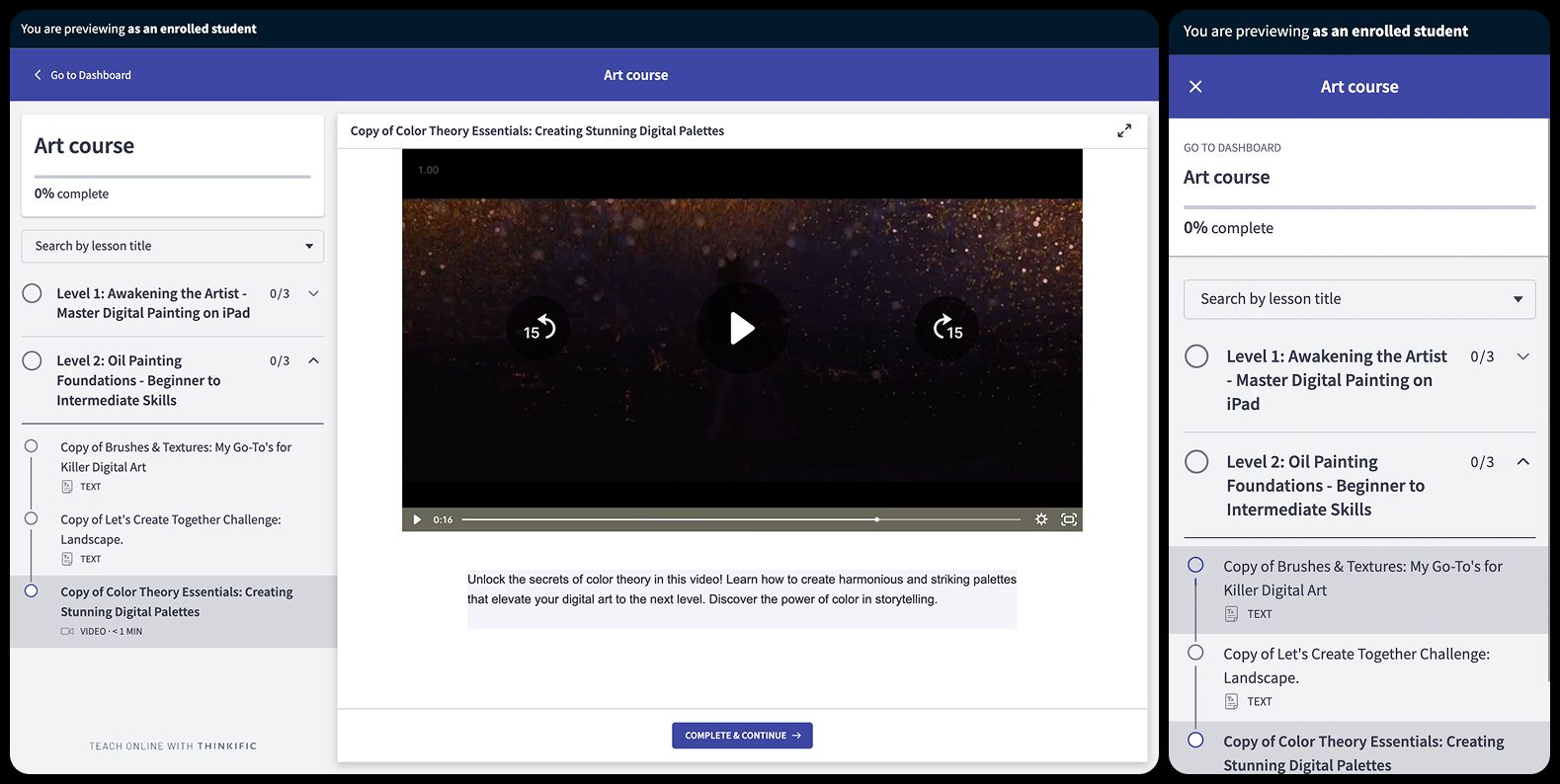
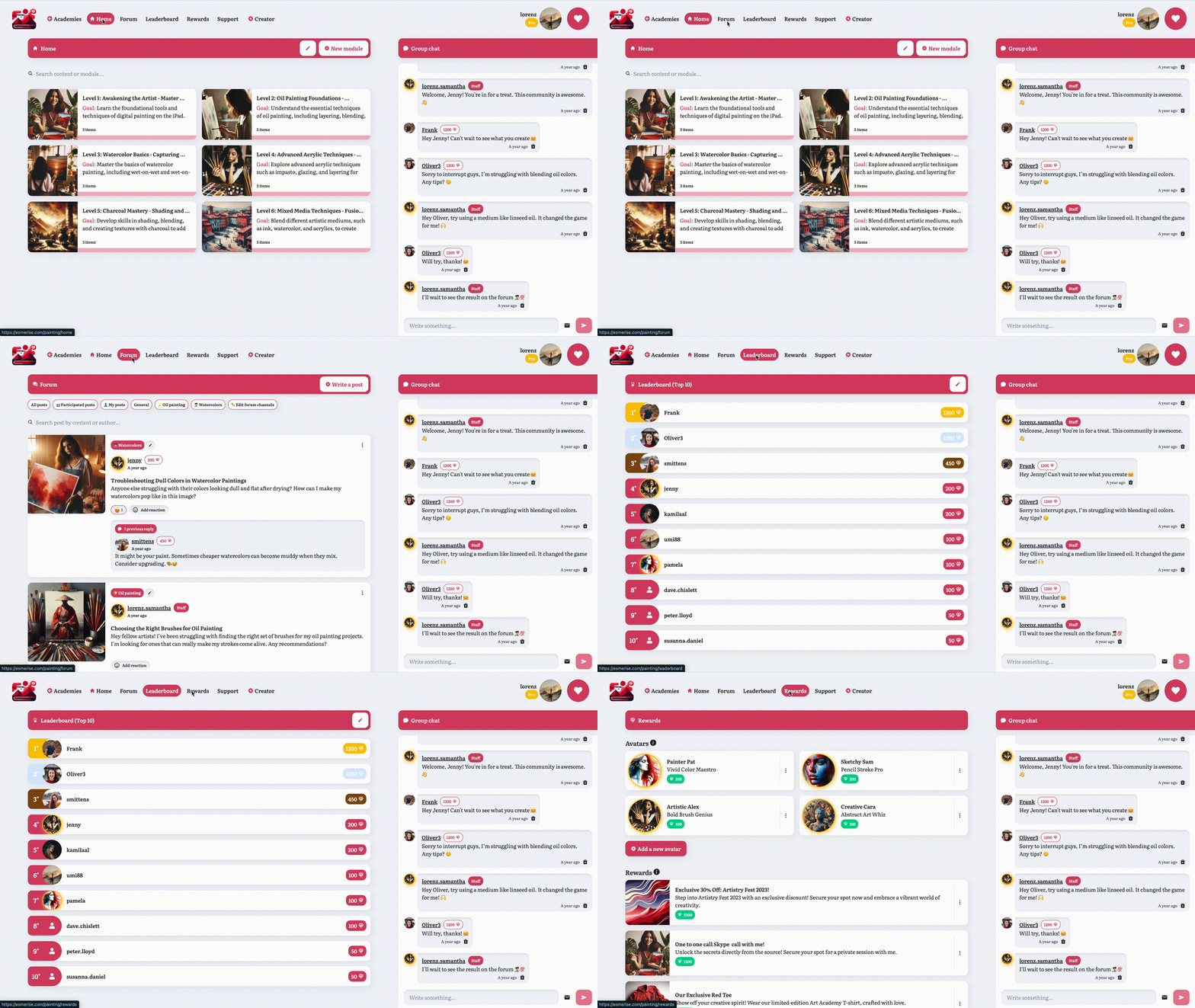
Traditional course platforms prioritize video and build the experience around a list of content on the left and the selected lesson on the right. Today, that approach is no longer enough.
Students expect a fluid, engaging environment where lessons, community and materials are easy to access from any device. When the path is scattered across multiple platforms or requires complicated steps to access the content, students drop out of the course.
Students expect a fluid, engaging environment where lessons, community and materials are easy to access from any device. When the path is scattered across multiple platforms or requires complicated steps to access the content, students drop out of the course.
Community and gamification: the strongest ways to differentiate your course
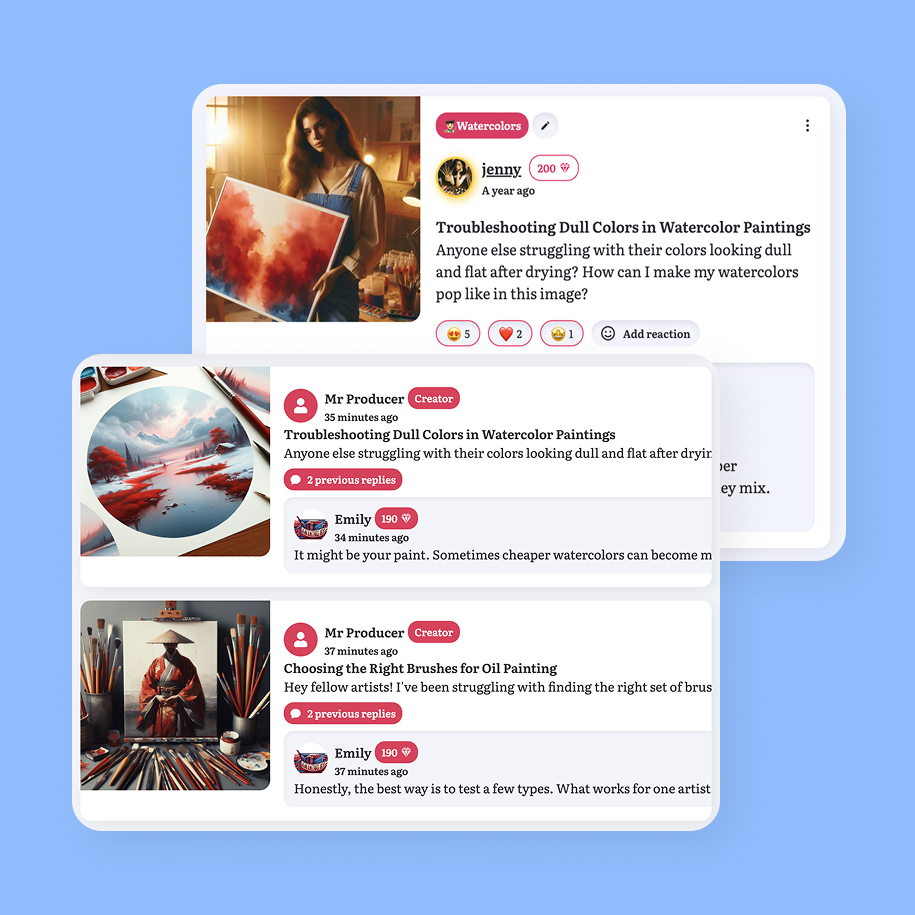
An active community does more than help existing students complete the course after buying it: it is one of your strongest sales arguments. A page showing lively conversations, a supportive group and students sharing progress and results sells much better than one that simply promises "unlimited video access".
Much of its strength comes from what social psychology describes as the social identity cycle. First comes identification: people recognize themselves in the group, its values and the results other members are achieving. Then comes participation: at first they observe, read discussions and follow other people's progress, before contributing more and more actively.
Over time, validation and reward follow. Progress is recognized, a reputation develops within the community and the sense of belonging grows. People do not stay only for the content: they stay because they feel part of something.
Much of its strength comes from what social psychology describes as the social identity cycle. First comes identification: people recognize themselves in the group, its values and the results other members are achieving. Then comes participation: at first they observe, read discussions and follow other people's progress, before contributing more and more actively.
Over time, validation and reward follow. Progress is recognized, a reputation develops within the community and the sense of belonging grows. People do not stay only for the content: they stay because they feel part of something.
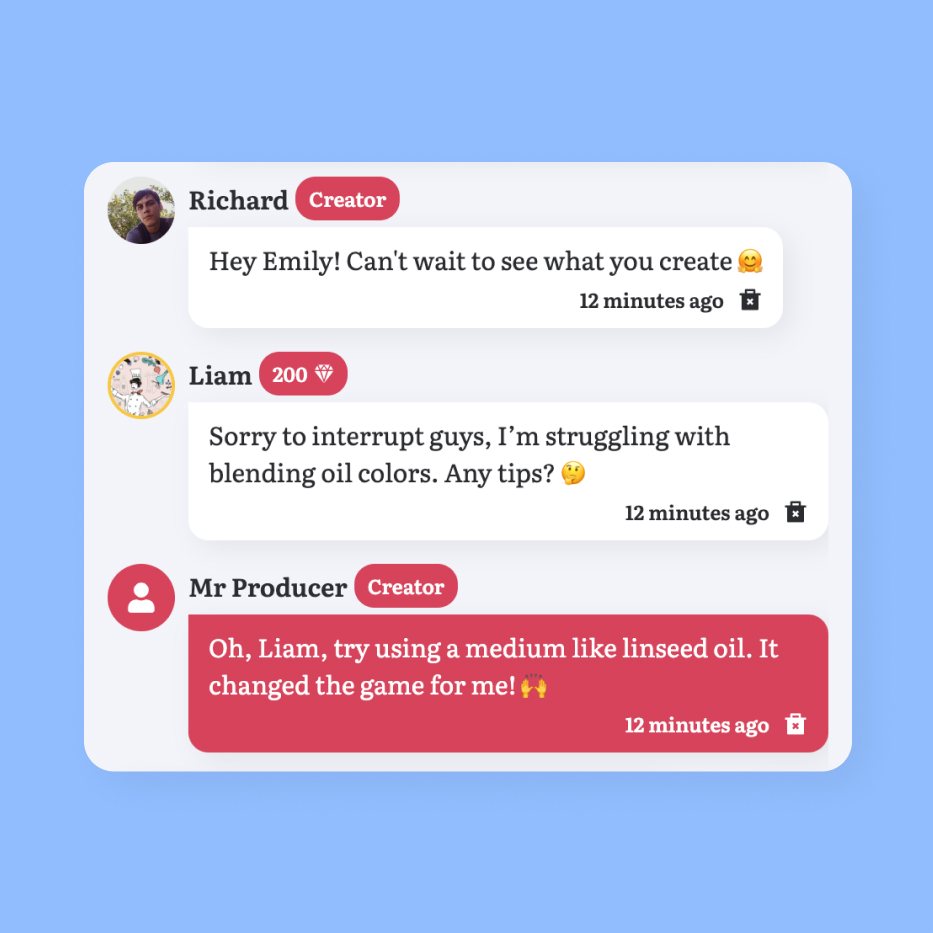
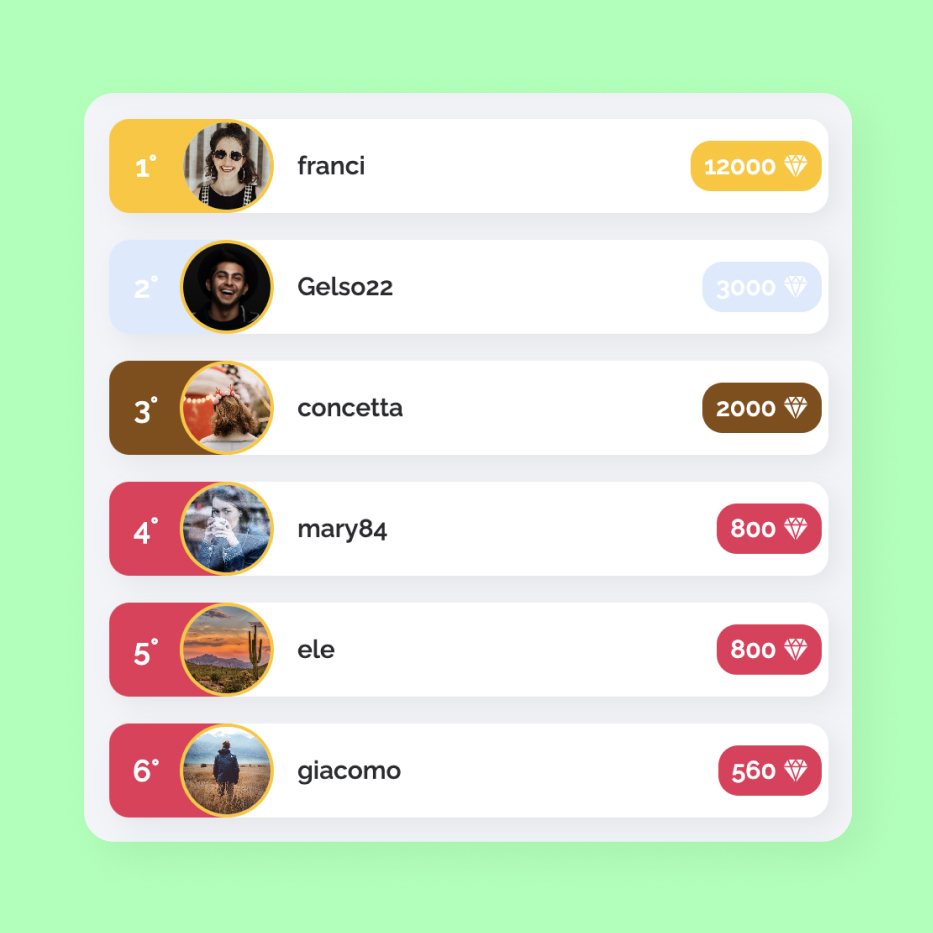
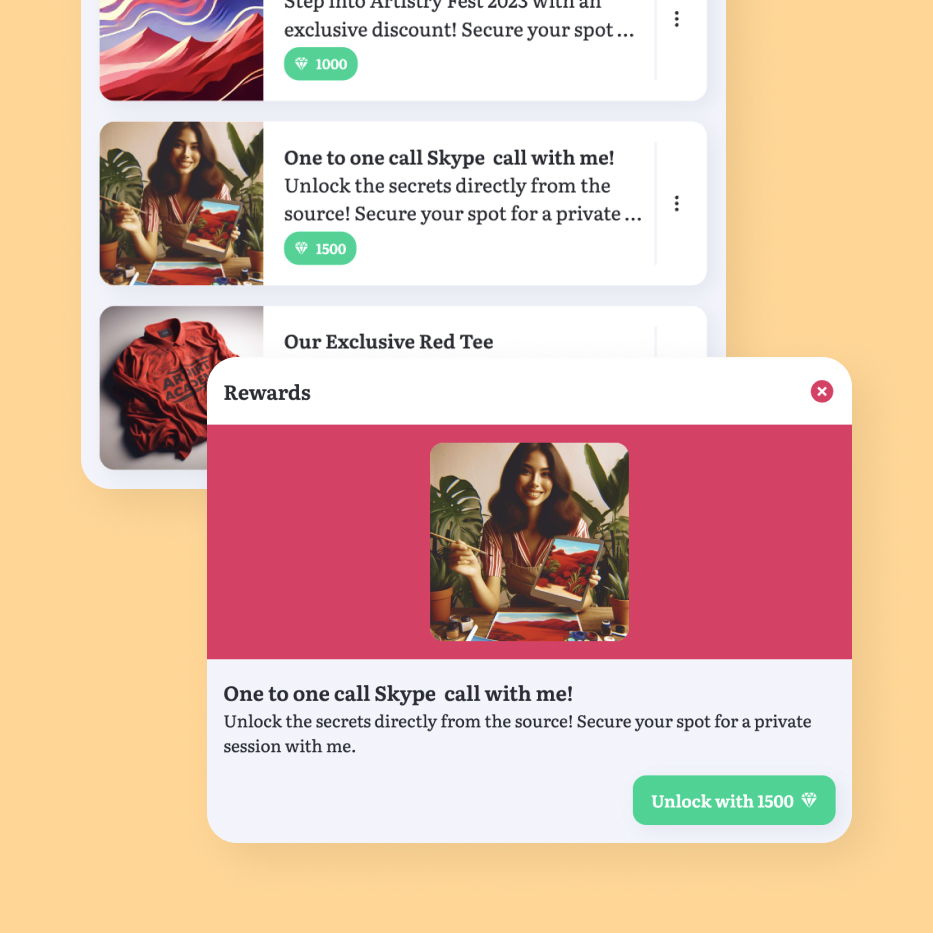
This is where gamification comes in. Points, leaderboards, levels, badges and rewards are not simply there to make the course "more fun". They make progress visible, give public recognition to achievements and reinforce the participation and belonging mechanisms that keep a community alive. In other words, the community creates the social context; gamification makes that context more engaging and tangible.
Dopamine plays an important role in reward motivation. This is why the most effective systems combine extrinsic rewards, such as prizes and merchandise, with intrinsic rewards, such as social recognition, status and the satisfaction of seeing your progress recognized by other members.
Research suggests that gamification can significantly increase engagement in online programs. A systematic review published in PLOS One found positive effects in most of the studies it analyzed.
Some commercial cases help illustrate the potential of these mechanisms, without mistaking them for a guarantee of results:
Dopamine plays an important role in reward motivation. This is why the most effective systems combine extrinsic rewards, such as prizes and merchandise, with intrinsic rewards, such as social recognition, status and the satisfaction of seeing your progress recognized by other members.
Research suggests that gamification can significantly increase engagement in online programs. A systematic review published in PLOS One found positive effects in most of the studies it analyzed.
Some commercial cases help illustrate the potential of these mechanisms, without mistaking them for a guarantee of results:
- Moosejaw achieved 560% ROI; 76% of buyers shared the campaign on social media (Smith School of Business).
- In a gamified e-learning course, badges and student engagement showed a strong positive relationship (r = 0.69; p < 0.05) (Smart Learning Environments).
- KFC Japan's Gamify campaign increased sales by 106% year over year (Gamify).
Operational checklist: what to do in your first 30 days
| Days | Goal | Output |
|---|---|---|
| 1-3 | Define audience and problem | Ideal student, problem, desire, starting level |
| 4-7 | Validate language and urgency | 5-10 conversations, surveys, objections and recurring words |
| 8-10 | Write promise and offer | Title, transformation, price, bonuses, guarantees or boundaries |
| 11-15 | Design the course | Modules, essential lessons, exercises, first quick win |
| 16-20 | Prepare production | Smartphone setup, microphone, light, video tests, outlines |
| 21-25 | Create sales assets | Page, emails, pre-launch content, FAQ, checkout |
| 26-30 | Launch or open a limited test | First students, onboarding, community, feedback |
Explore platform selection in more depth
Once your promise, course and sales model are clear, you can evaluate the software more carefully. Start with our guide to the best platforms for creating and selling online courses or explore our comparisons and alternatives to popular platforms.
Main sources and useful reading
The sources below provide context for the main points in this article. Where we report observations from our work with Esmerise creators, we say so in the text.
- DataReportal, Digital 2026: Global Overview Report - up-to-date data on internet, mobile, social media and online video.
- OECD, Managing screen time - PISA data on screen time, social networks and distraction.
- Lorenz-Spreen et al., Accelerating dynamics of collective attention - study of the speed and dynamics of collective attention.
- Guo, Kim and Rubin, How video production affects student engagement - empirical analysis of engagement in MOOC videos.
- Johnson et al., Does gamification increase engagement with online programs? - systematic review of gamification and engagement.
- Litmus, Email Marketing ROI - average benchmark for email marketing returns.
- Smith School of Business, gamification white paper - Moosejaw case study.
- Imran, Evaluation of awarding badges on student's engagement in gamified e-learning systems - study of badges and engagement in an e-learning course.
- Gamify, KFC Japan case study - gamified campaign and sales.
Conclusion: the courses that win keep up with market changes
The courses that perform best in the coming years will not be those with the most videos or the most cinematic production. They will be created by people who understand that the game has changed: attention is the scarcest currency, free information has shifted value toward the person, and mobile is the implicit standard every student carries in their pocket.
To get started, you need a specific promise, a recognizable person behind the course (you) and an essential first path. Record with simple tools, take care of audio, validate before recording everything and run a real test before building a huge catalog.
We hope this guide has been useful. As you have seen, one of the most important decisions you will make is the platform on which you build your business. The world of online learning has changed, but many established platforms struggle to keep up. They force you to compromise: a solid course with an outdated student experience, or a lively community with weak learning tools, as with Skool and similar platforms.
Esmerise was created precisely from this problem: years spent listening to the frustrations and needs of thousands of creators who, like you, wanted something better. We designed a new ecosystem from scratch where courses, community and gamification finally work together. When students are more engaged, they do not simply complete your courses: they become a loyal community that supports your growth over time.
Along the way, we removed unnecessary complexity and added features that no one else offers in the same package: a unified PWA app customized with your brand (included, not a paid extra), multilingual human support to genuinely assist you, and accessible pricing plans without artificial limits, designed to grow with you.
To get started, you need a specific promise, a recognizable person behind the course (you) and an essential first path. Record with simple tools, take care of audio, validate before recording everything and run a real test before building a huge catalog.
We hope this guide has been useful. As you have seen, one of the most important decisions you will make is the platform on which you build your business. The world of online learning has changed, but many established platforms struggle to keep up. They force you to compromise: a solid course with an outdated student experience, or a lively community with weak learning tools, as with Skool and similar platforms.
Esmerise was created precisely from this problem: years spent listening to the frustrations and needs of thousands of creators who, like you, wanted something better. We designed a new ecosystem from scratch where courses, community and gamification finally work together. When students are more engaged, they do not simply complete your courses: they become a loyal community that supports your growth over time.
Along the way, we removed unnecessary complexity and added features that no one else offers in the same package: a unified PWA app customized with your brand (included, not a paid extra), multilingual human support to genuinely assist you, and accessible pricing plans without artificial limits, designed to grow with you.
Start building your business today.


Frequently asked questions
Can you create a professional online course using only a smartphone?
Yes. For many creators, a smartphone is already enough. Do not start by buying an expensive camera: focus on audio, light and framing. A microphone close to your mouth, a front light and a tidy room make a bigger difference than almost any other equipment.
Do online courses made only of recorded videos still work?
They can work for simple problems, but a library of long videos requires a lot of discipline from the student. Focused lessons, a clear path and opportunities to interact make it easier to continue.
Should I create the entire course first or sell it first?
In most cases, validate the promise and offer first with a waiting list, webinar, masterclass, discovery call or limited-seat test. Then you can record the path more clearly, starting with the essential modules and improving it with real feedback.
Can a Skool-style community replace an online course platform?
It can help engagement, but it becomes scattered when there is no organized learning path or suitable sales tools. Courses and community work better when students find them in the same environment.
How long should an online course lesson be?
There is no universal duration. Often 5-15 minutes are enough to explain one step well. A longer lesson makes sense when the content requires it, not because the course needs to look richer.
How do you decide the price of an online course?
Price depends on the value of the transformation, support level, audience specificity, creator reputation and difficulty of the result. A self-paced video course can be more accessible; a course with community, feedback, calls and implementation support can be premium.
Which metrics should I track after launch?
Beyond sales, track student activation, completion of the first modules, community questions, drop-off points, support requests, testimonials, refunds and lead-to-customer conversion. A healthy course is not only sold: it is started, followed, applied and recommended.
Why is Esmerise suitable for creating and selling online courses?
Because it brings course creation, sales, community, gamification and an app together in the same environment.